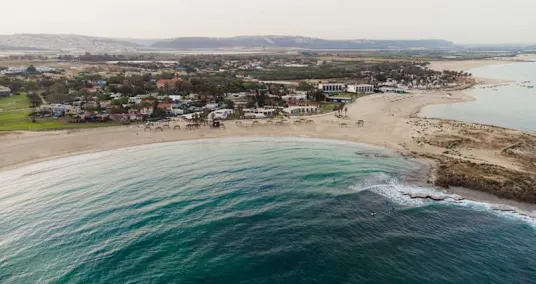
The discovery was made in an ancient shipwreck in the Dor Lagoon near the Carmel Coast, where archaeologists recovered nine pieces of unprocessed iron known as “blooms.”
Researchers from the University of Haifa said Wednesday that an underwater excavation off Israel’s northern Mediterranean coast uncovered what they described as the earliest known cargo of raw iron transported by ship, dating back around 2,600 years, Xinhua reported.
The discovery was made in an ancient shipwreck in the Dor Lagoon near the Carmel Coast, where archaeologists recovered nine pieces of unprocessed iron known as “blooms.” According to the university, the find provides direct evidence of how iron was transported in its earliest commercial stages.
The material was preserved in its original form, having solidified directly in a smelting furnace without undergoing forging or further refinement. Researchers said this distinguishes the cargo from later iron artifacts that typically show signs of shaping or tool-making.
Unlike copper and bronze, which could be melted into liquid form in ancient production processes, iron was heated with charcoal to produce a solid, porous mass. That mass was generally hammered to remove impurities and create denser material suitable for tools and implements.
The recovered blooms showed no indication of that secondary processing stage, suggesting they were transported immediately after production.

Earliest iron shipment discovered in ancient Mediterranean wreck
To determine the age and condition of the cargo, researchers conducted microscopic and chemical analyses.
Radiocarbon dating was also carried out on charred wood embedded in one of the pieces, helping confirm the timeline of the shipment. The findings were published in the journal Heritage Science.
Researchers said the cargo indicates that iron was being moved in raw form from production sites to other locations for further processing, pointing to a level of specialization in ancient manufacturing and trade networks in the Mediterranean.
The University of Haifa said the discovery provides new insight into early iron production and distribution practices in the region.
LATEST POSTS
- 1
 Figure out how to Consolidate a Brain science Certificate with Social Work
 - 2Arctic sea ice hits lowest winter level as unprecedented heat hits smashes records all over Earth
- 3Birutė Galdikas: The last of the ‘angels’ in primatology’s most extraordinary chapter
- 4Chevron Says Damage at Wheatstone LNG Will Hamper Restart
- 57 Powerful Methods for forestalling Telephone Overheating: Keep Your Gadget Cool



- Our 10 favorite Space.com reader astronomy photos of 2025
- Merz: 80% of Syrians in Germany should return in three years
- Why haven’t humans been back to the moon in over 50 years?
- Find the Effect of Web-based Entertainment on Psychological wellness: Exploring the Advanced Scene Securely
- Your guide to how to safely thaw and cook your Thanksgiving turkey this year, according to experts
- Flu activity in US could continue to rise for weeks, top CDC epidemiologist says
- Vote in favor of your Number one Kind of Shades
- Figure out How to Upgrade Your Gold Speculation Portfolio: Vital Bits of knowledge and Strategies
- Best bar-b-que Style: Which One Is Your Number one?